Why Most Ex-Spouses Never Have This Conversation
I’m releasing a 3-episode podcast series to let you listen in on a conversation between my ex-wife and me about our marriage, my affair, and several other things. Here are some thoughts about it. —Tim Tedder
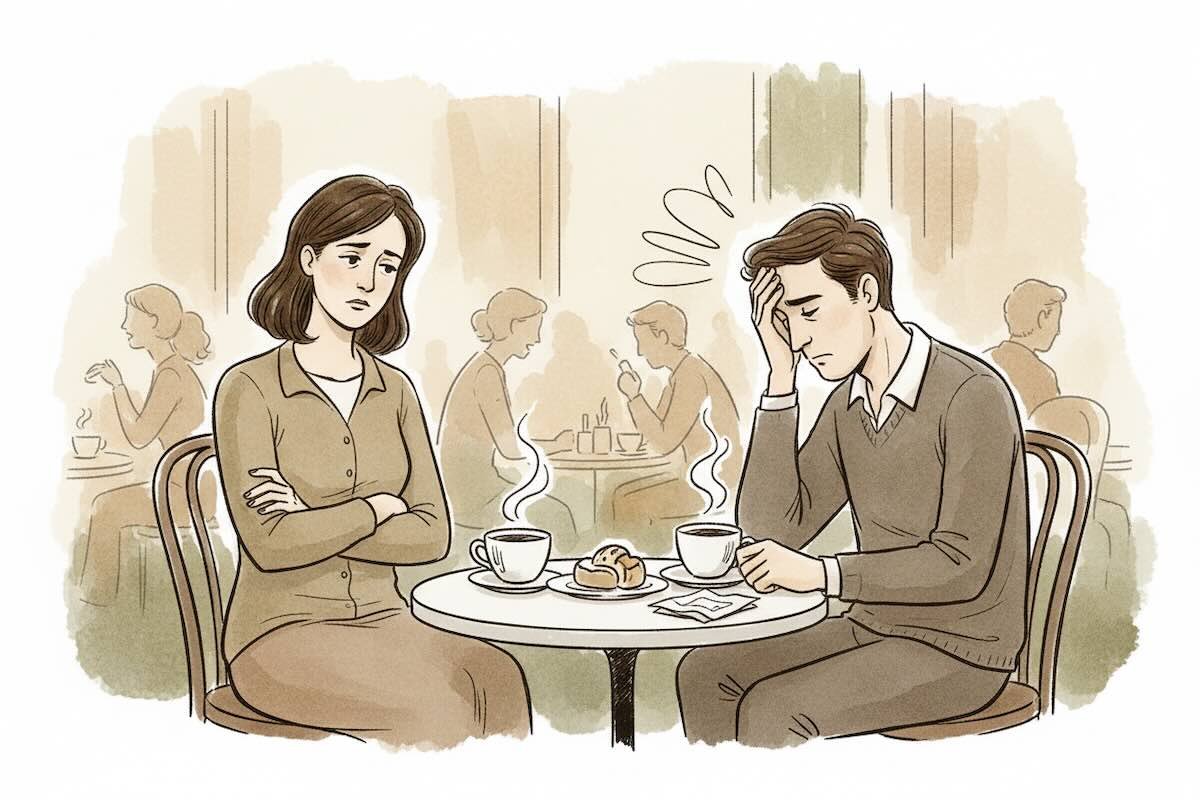
When I tell people that I sat down with my ex-wife to record an honest conversation about our marriage, my affair, and our divorce, the most common response isn't admiration. It's disbelief.
How is that even possible?
It's a fair question. Most divorced couples don't talk this way. Many don't talk at all. And the ones who do often keep things carefully surface-level—civil enough to manage the “business of life” and guarded enough to avoid reopening wounds.
What Konnie and I did is uncommon, but I don't think it needs to be. Most couples simply never try, either because they don’t care or because they don’t want to make another mess.
So what actually makes a conversation like this possible?
Someone has to go first.
An honest conversation after a betrayal doesn't start mutually. One person has to initiate. In most cases, the person who caused the injury carries that responsibility. It isn't fair to ask the wounded person to make the first move toward openness. The responsibility to risk that belongs to the one who broke the trust.
For me, that meant being willing to say things plainly, without softening them to protect my own image. It meant not waiting for Konnie to meet me halfway before I was willing to be honest.
Honesty has to be more important than being right.
One of the things that poisons post-divorce communication is the unspoken competition to be the one who tried harder, suffered more, or handled things better. That competition makes real conversation impossible.
Konnie and I could only have this conversation because we'd each, separately, let go of the need to win it. The goal was to tell the truth. That shift, from trying to win to trying to understand, is harder than it sounds. It requires letting go of the version of events that flatters you more.
Healing had to happen before the conversation did.
Konnie and I didn't sit down the year after our divorce and record this. Years of individual work—her processing her pain, me honestly examining my failures—made this conversation possible. We weren't just pretending to heal; we had healed enough that the conversation didn’t feel dangerous.
If you try to have this conversation before you're ready, it might make things worse. Timing matters.
The conversation isn't for everyone.
I want to be careful here. Not every ex-spouse relationship can arrive at this kind of openness, and that's not always a failure of effort or character. Some situations involve ongoing patterns of manipulation, narcissistic behavior, or unresolved volatility that make honest conversation genuinely unsafe. In those cases, protecting yourself isn't avoidance; it's wisdom.
What Konnie and I share is not a template everyone can follow. It's evidence of what becomes possible for some people who have genuinely done their work.
Why it matters.
If you're in the middle of the aftermath of infidelity, whether as the person who was betrayed or the one who did the betraying, the idea of one day having a conversation like this probably feels impossibly far away. I understand that. But I believe it's worth considering as a distant possibility, not because reconciliation is necessarily the goal, but because the kind of healing it represents (honest, mutual, unburdened by the need to punish or protect) is available to more people than they realize.
It usually starts with one risky step.