From a 2025 comment thread following a Washington Post essay on repairing trust after infidelity
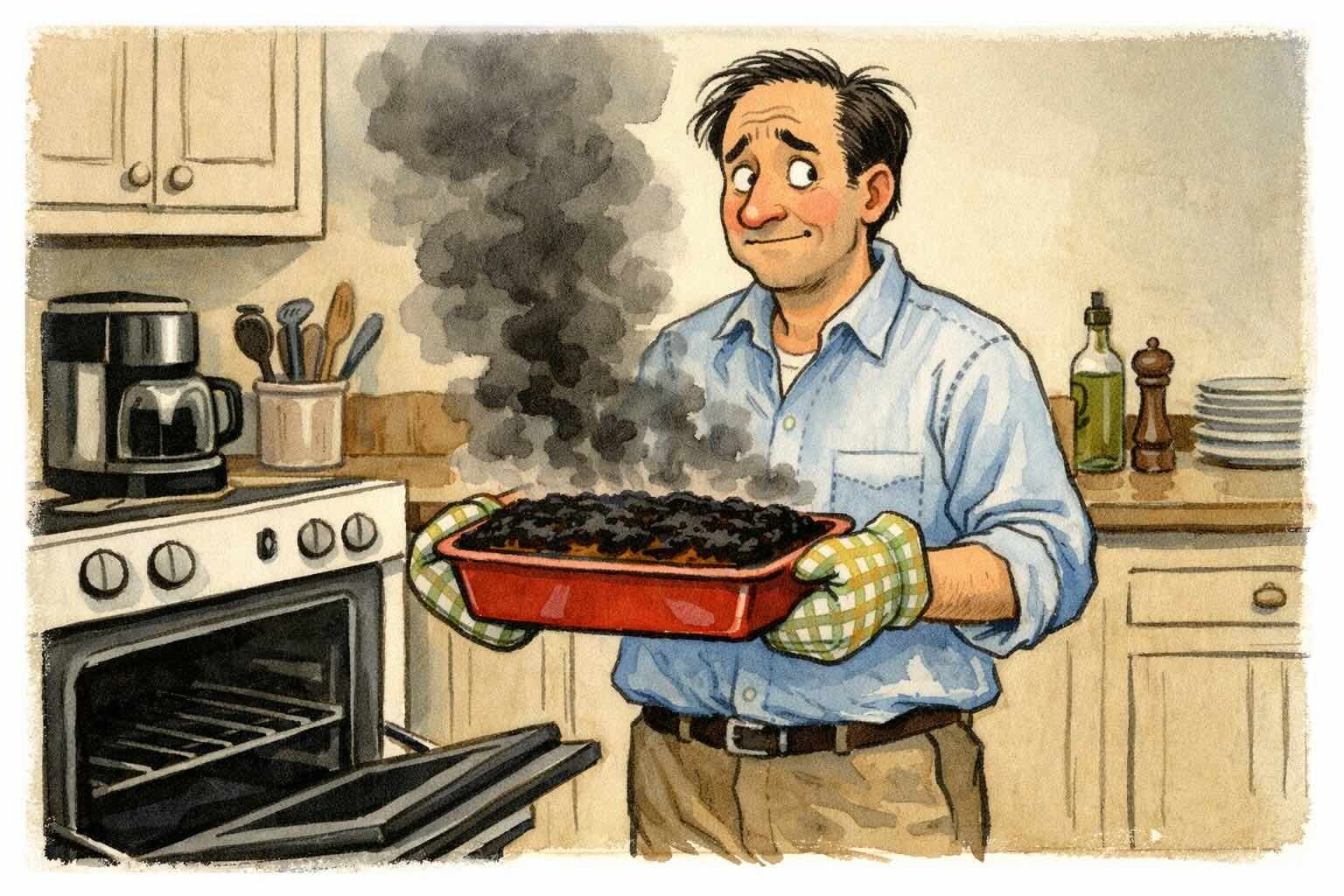
After the affair came out, he stopped talking so much.
Before, every conversation had turned into explanations, defenses, clarifications. Words stacked on top of words until neither of them could breathe. After a while, he seemed to realize that more talking wasn’t helping. So he tried something else.
One evening, while she was out, he decided to make dinner.
He wasn’t much of a cook. This wasn’t a romantic gesture or a grand plan. It was more like a quiet attempt to be useful in a house where he no longer knew his role. He found a recipe online, pulled out a casserole dish, and got to work.
When she came home, the smell hit her first. Not bad exactly—just intense. Overcooked. She looked into the kitchen. He was standing there, staring at the oven in defeat.
The top of the casserole was blackened. The middle, when he finally cut into it, was still cold. He looked at it for a long moment and said, almost to himself, “I think this represents my emotional availability right now.”
She sat down at the table. He turned off the oven. There was a long, awkward pause—the kind they’d been having a lot lately, where neither of them knew what to say without making things worse. Finally, she said, “That might be the most honest thing you’ve said all week.”
They ordered pizza.
Trying Without Asking
Later, she wrote about that night in a comment responding to an article about repairing trust after infidelity. She said the casserole didn’t fix anything. It didn’t soften her anger or answer the bigger questions she still had. But it mattered in a different way.
He wasn’t trying to explain himself.
He wasn’t asking for forgiveness.
He wasn’t making promises he couldn’t yet keep.
He was just trying to show up.
In affair recovery, effort often looks clumsy. People imagine repair as eloquent apologies and perfectly timed insights. In real life, it’s more likely to look like burnt food, awkward silence, and someone standing in the kitchen, unsure where they belong.
What made that night different wasn’t the casserole. It was the shift. He was learning that remorse doesn’t need to be impressive to be real. Sometimes it just needs to be sincere.
Why This Matters
For the betrayed partner, gestures like this can land in complicated ways. They don’t erase the pain. They don’t cancel the questions. But they can signal something important: I’m not performing. I’m participating. And for the partner who caused the harm, moments like this are often where humility begins.
The casserole became a quiet metaphor in their story. Not a joke they told friends, not something they laughed about later, but a marker. A night when effort replaced argument. When honesty slipped out sideways, through a burnt crust and a cold center.
If you’re in the middle of a repair, or on either side of it, don’t underestimate the value of imperfect effort. You don’t have to say everything right. You don’t have to fix everything at once.
Sometimes healing starts with showing up, even when all you have to offer is a half-cooked casserole and the willingness to admit, This is where I am right now.
And sometimes, that’s enough to keep the door open for what comes next.
Do you have something to share? Tell us about it.