When researchers asked people why they keep some things private from their partners, the most common answer wasn’t shame. It wasn’t fear of conflict. Those reasons came up, but the most common answer was simpler: I believe some aspects of my life should remain private, even in a marriage.
That answer is worth considering because, on one level, it’s not wrong. A certain amount of privacy inside a relationship is natural and healthy. But it’s concerning to realize how far that belief can extend without being questioned.
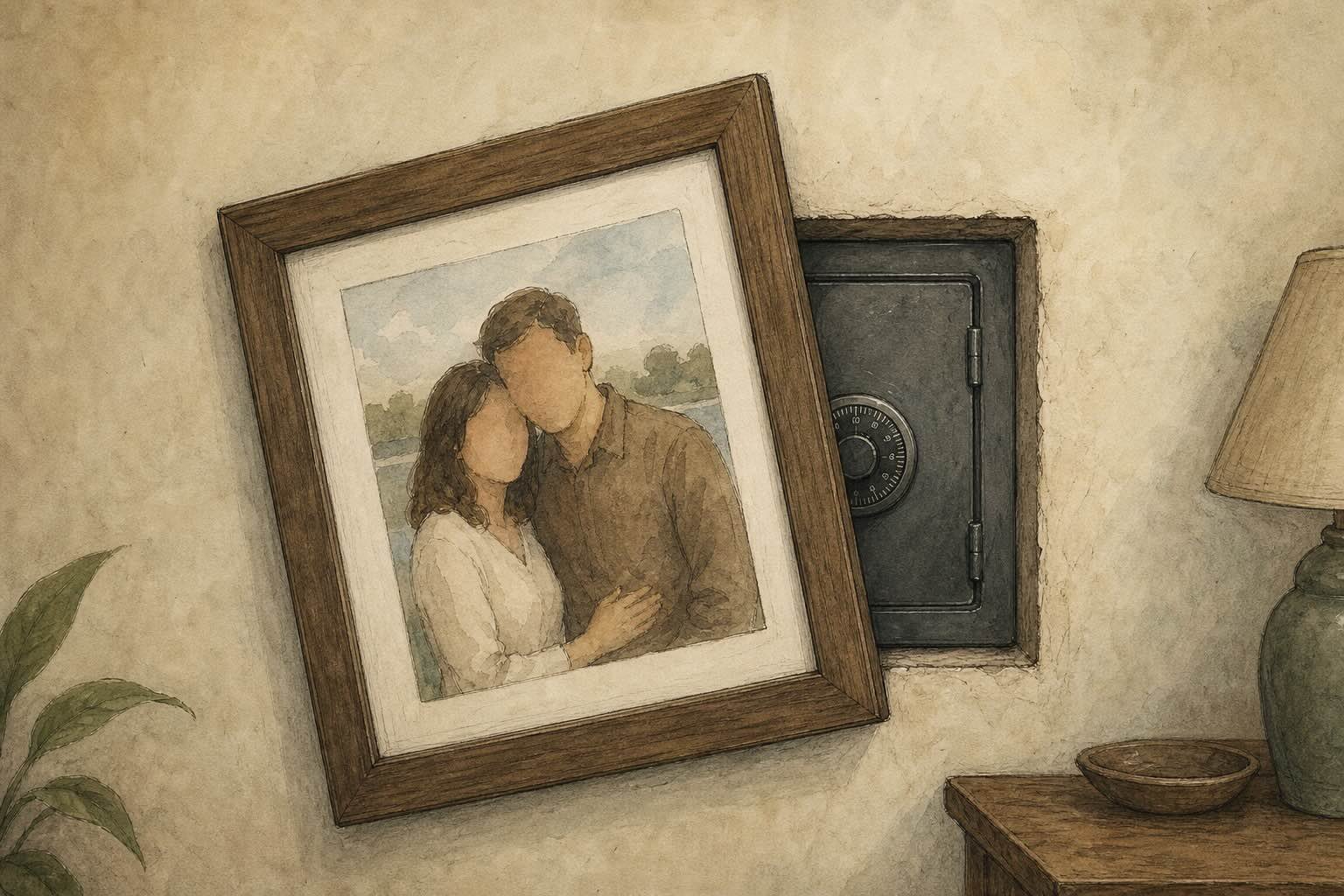
There's a version of privacy that belongs in every relationship: separate friendships, interior thoughts not yet ready to be shared, a history that's yours before it's anyone else's, boundaries around work, family, and the parts of yourself still being figured out. That kind of privacy is not deception; it's the ordinary process of two people who remain individuals inside a partnership.
But there's another version of privacy that might look similar while functioning entirely differently. It's the version where "some things should stay private" becomes the rationale for a hidden credit card, a deleted thread, a friendship that never quite gets mentioned, a growing inner life built in the spaces the partner never sees. It might use the same vocabulary as healthy boundaries, but it produces entirely different results.
The difference isn't always obvious, even to the person doing the hiding. Their rationalization of privacy probably wasn’t formed all at once. It accumulated. At first, a small thing was kept quiet because the timing was wrong. Then another, because it wasn't worth the conversation. Then something larger, because the pattern was already in place and disrupting it felt harder than continuing it. By the time the hiding had become significant, it had also become normal.
That kind of privacy policy holds a set of assumptions about what marriage is. If a person genuinely believes that certain things should remain private from a partner, they are (whether they articulate it or not) defining the limits of the union. They are saying: this is where you are permitted, and this is where you are not. And they are making that determination alone, without the partner's knowledge, let alone consent.
That's not a boundary. That's a closed door that the other person doesn't even know exists.
For the betrayed partner, this realization is both clarifying and painful. What often emerges in the aftermath of an affair, or any major concealment, is the gradual recognition that the version of the marriage they were living in was not the same version their partner was living in. Their house had a hidden basement beneath it.
That recognition doesn't just hurt. It destabilizes. Every memory gets examined. Every moment of apparent closeness gets quietly questioned. If they were hiding that, what else is there? The problem isn't just what was hidden; it's that the hiding was deliberately sustained over time. Each day it continued was a day the partner chose not to close the distance. Their hiding was an intentional pattern, not a momentary lapse.
What "I thought some things should stay private" rarely means is: I thought carefully about what intimacy requires and made a considered decision about where the limits should be. What it usually means, underneath, is something closer to: I wanted something I knew my partner wouldn't sanction, and privacy let me keep it.
That's worth distinguishing because the first version is a reasonable position when considering the nature of a healthy relationship. The second version is a way of using the language of autonomy to avoid what deception actually means.
Neither the deceived nor the deceiver is well-served by compromising that distinction. For the person who hid things, seeing it clearly is part of understanding what they actually did, and why. For the person who was deceived, it's part of understanding that what was hidden from them wasn't simply a private thought or a personal journal. It was a relationship… a financial life… a version of their partner they were never shown.
The question that tends to matter most, in the long work of rebuilding after a betrayal, isn't whether the hiding was wrong. That answer is usually obvious. The more important question is: How did the person doing the hiding understand the partnership they were in?
Did they see the marriage as a full union, one that required bringing even hard things into their shared space? Or did they see it as two people running in parallel, each with their own private world, managing the overlap carefully and selectively?
The answer shapes everything that comes next, because rebuilding trust requires more than stopping the hiding. It requires becoming someone who genuinely understands why the hiding was a betrayal of the relationship's most basic premise: that you are, in all life’s spaces, known to each other.