When Your Devices Spill the Tea
The old saying goes: if you want to keep a secret, don't tell anyone. Timeless. Well, except that it didn’t account for the smartwatch. Or the fitness app. Or the shared photo cloud. Or the family iPad sitting on the kitchen counter, quietly syncing everything. Talk about spilling the tea…
The technology we've welcomed into our homes and onto our bodies was sold to us on the promise of convenience, connection, better fitness, and better sleep. What the marketing materials didn't mention is that these devices are, in their quiet and indifferent way, exceptional witnesses. They don't have feelings. They don't weigh consequences. They just log, sync, timestamp, and share because that's what they were built to do.
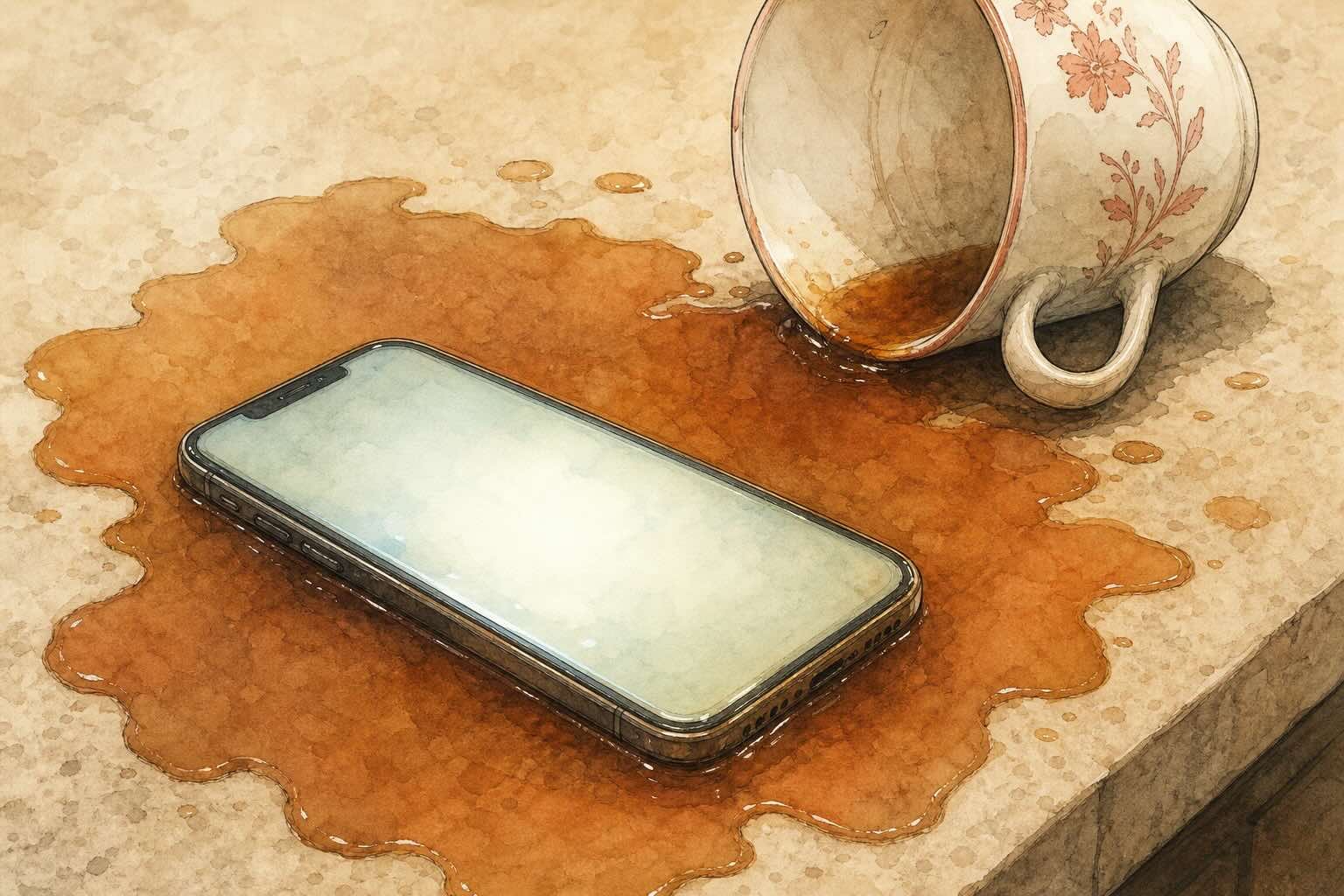
For a growing number of betrayed partners, the discovery of an affair didn't come through a confrontation or a confession. It came through a notification. Here are some real examples.
The Mattress
A woman in Michigan had been suspicious for months but couldn't point to anything concrete. Then the data from their smart mattress, a device they'd bought to track sleep quality, told her what she needed to know. The mattress had logged an elevated heart rate on her husband's side on three separate afternoons while she was at work. Not the kind associated with a nightmare—the kind associated with something else entirely.
She hadn't gone looking for it. She'd opened the app to check her own sleep score and ended up learning so much more.
The Fitness Tracker
He told her he'd been at the gym. He'd been telling her that a lot, actually, which she'd taken as a good sign at first. Then a friend mentioned she'd seen his car parked outside an apartment complex across town at the same time his GPS-linked workout app was logging a "run" in their neighborhood.
The route, it turned out, had been manually entered. The app had also logged his actual location. The two did not match.
Modern fitness trackers are exceptionally thorough. They note where you went, how long you stayed, and how elevated your heart rate was while you were there. They don’t tend to accept excuses.
The Smart TV
He was texting from the couch while his wife was in the kitchen. What he hadn't realized was that his phone had connected to the living room television via Bluetooth, a setting he'd used once to play music and never turned off. The messages he was sending appeared, in real time, on the large screen behind him.
His wife walked in while he was on his third text, clearly presented on 65 inches of 4K clarity. It wasn’t what she expected to watch, or what he intended to show, and that display changed the course of their marriage.
The Family iPad
They shared an iCloud account, as many couples do, because it seemed practical at the time. Photos taken on his phone backed up automatically. All of them. Including the ones he had forgotten he'd taken, on a weekend when he'd told her he was visiting his brother.
She wasn't looking for anything. She was showing their daughter photos from a birthday party when she scrolled just a bit more…
Shared cloud storage operates on a principle of radical inclusion: it keeps everything, assumes you want everything, and does not ask whether you've thought this through.
Google Maps Timeline
She only checked because he'd mentioned stopping for gas on the way home, and she wanted to know if he'd passed the dry cleaner. Google Maps Timeline, a feature that logs everywhere his phone had been and for how long, showed her the gas station. It also showed her forty minutes at an address she didn't recognize, three times in the past month, each on an evening when he'd told her he was working late.
She looked up the address. She figured out who lived there. The reality of his “working late” took on a very different meaning.
What the Devices Don't Do
The slips of technology are almost funny, in a grim sort of way. The mattress. The TV. The family iPad. There's something absurd about the sheer indifference of it. All these devices faithfully performed exactly as they were designed to do, with no awareness of what they were unraveling.
But that kind of discovery, however it is realized, exposes a painful reality. The medium doesn't soften the message. A GPS timestamp and a confession produce the same result: you now know something you cannot unknow, and the life you thought you were living is different from what you believed.
Technological devices can sometimes surface the truth, but they can't tell you what to do with it. They can end the uncertainty of not knowing; they can't resolve the harder uncertainty of knowing. They log, timestamp, sync, report, and then they go silent, leaving you alone with what they found.
Smart technology has turned out to be a pretty good witness, but it’s not so good at getting you out of the mess. That still takes a lot of good old-fashioned effort.