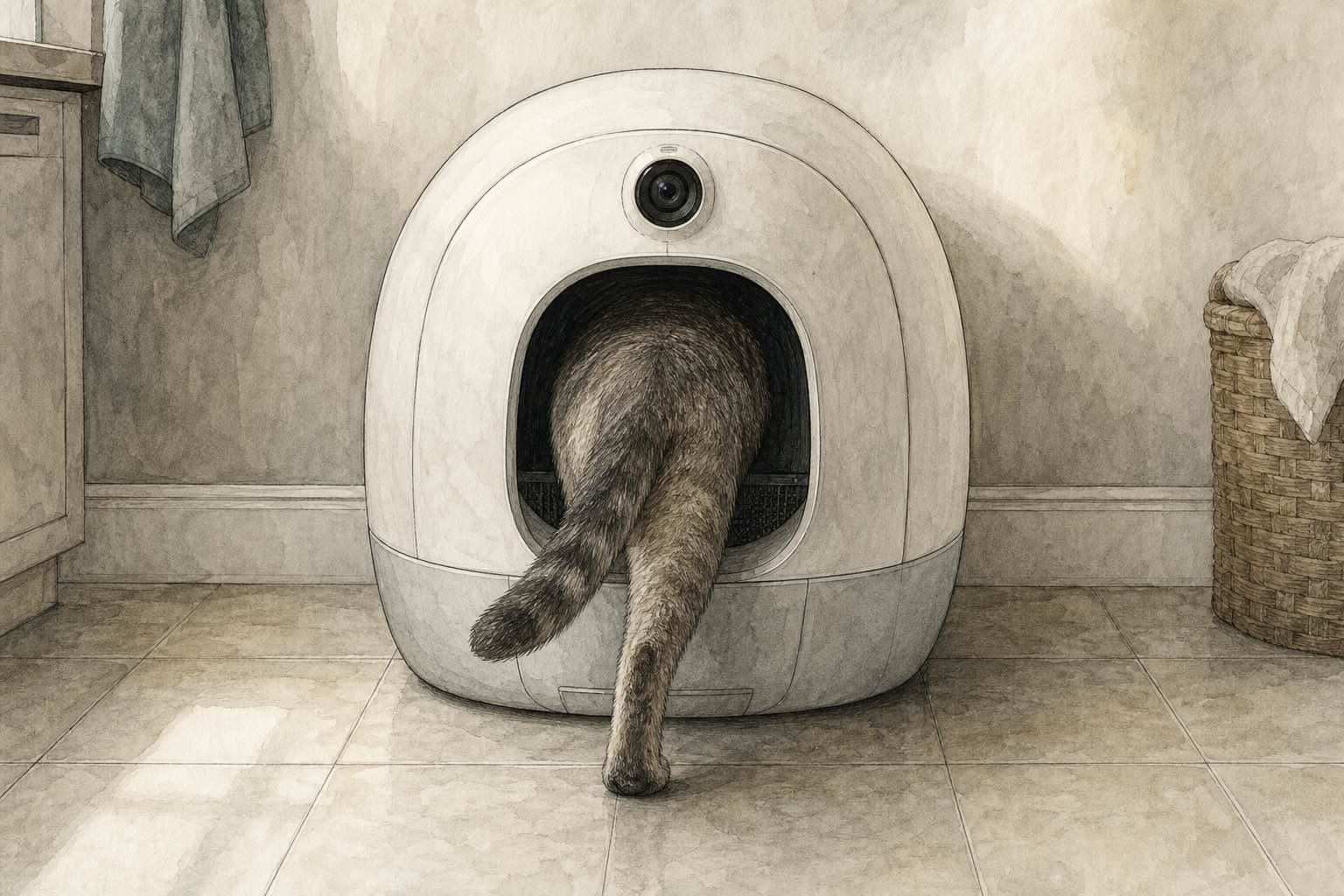
Earlier this year, a man discovered his partner's infidelity through the camera inside their cat's automated litter box.
I know that sounds a bit absurd, and the internet treated it accordingly. The device cost nine hundred dollars. It was designed to monitor a cat's bathroom habits and report them through an app. It was, in the most literal sense, doing its job.
The method of affair discovery varies enormously. It might be a phone left unlocked, a message from a stranger, a mis-sent text, or a slip of the tongue. But the experience is remarkably uniform, because what happens is often the same: a person's experience of “what’s real” is revised without their consent, and usually without preparation.
Confessions at least come with a preamble. Someone sits you down. There is a tone of voice, a look, a sense that something is coming. Accidental discovery offers none of that. You are checking an app. You are scrolling through photos. You are looking for something completely unrelated, and then the world shifts.
That absence of warning matters, because the nervous system responds to it accordingly. Betrayal trauma researchers have noted that the suddenness of discovery is one of the factors that shapes the severity of the response. Something that arrives without any preparation, in an ordinary moment, embeds differently than something you were braced for.
But that trauma tends to get left out when the story gets told as entertainment. The litterbox camera is just another of many social narratives that readers often find humorous. We tend to enjoy a good “gotcha” story. What the viral stories tend to leave out is what happens next, because that part isn't entertaining.
The moment of discovery gets all the attention: the litter box, the smartwatch, the kiss cam. It is dramatic and shareable. What usually gets left out is what happens the next day. The conversation with the children. The decision about who sleeps where. The months of trying to work out whether the relationship can hold any of this, and the longer months of finding out.
Discovery is not the end of the story. It is the first sentence of a very long chapter. If it’s not your story, you may not read beyond that first sentence. But if it is yours, you are bound to live out the rest.
If you are in the days right after your own version of that moment, the disorientation you are feeling is not a sign that you are handling it badly. It is the appropriate response to having your understanding of your own life rewritten without warning. But you know now, and you get to decide how you’re going to write your part in the rest of the chapter.
Do you have something to share? Tell us about it.