What surveillance after an affair can never tell you
Written by Tim Tedder
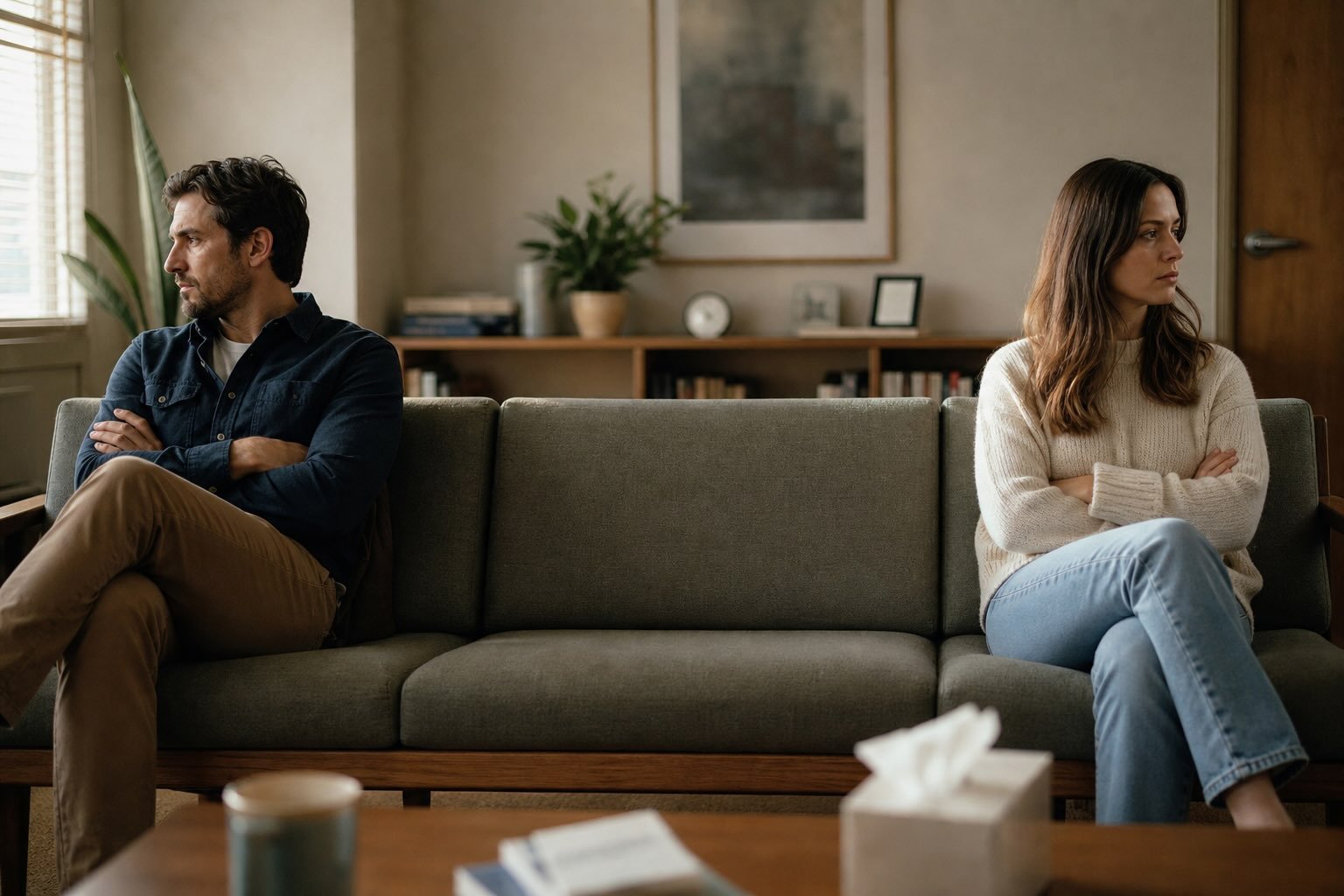
They leaned against opposite sides of my office couch. It had been nearly two and a half years since she caught him in an affair with a coworker, but today the pain felt fresh again.
"How does he expect me to trust him when he keeps hiding things?" she continued. "Sometimes I check his phone..."
"Constantly!" he interjected.
"...and the other day I found a call from a number he apparently forgot to delete."
"I didn't forget to delete it," he argued. "It was probably just a call from a prospective client. I honestly don't remember."
"Well, that sure sounds familiar," she accused. "How many other things have you forgotten? Like the 'mystery trip' you took last week?"
"What trip was that?" I asked.
She stared at him, daring him to take up the narrative. He accepted the challenge. "She constantly monitors my GPS location. Last week, I apparently went off the grid for a while. I don't know what happened, but Google tried to compensate for the lost data by guessing my travel, drawing criss-crossed squiggles across the map. She assumes I'm hiding something. I'm not. I haven't done anything outside my normal routine."
"How am I supposed to believe that?" she countered. "All you did was lie to me before, and now you expect me to just accept your word when this shady evidence shows up? You may have fooled me once, but I'll never be the sucker again."
The Trap of Required Accountability
I've sat with some version of this couple many times. And I want to be careful about what I say next, because it would be easy to hear it as taking his side. It isn't. Her vigilance makes complete sense. She once trusted her own read on reality, but the reality she'd assumed turned out to be something else entirely. Of course she watches now. Of course she checks. Anyone would feel those compulsions.
But notice what the watching has produced. Two and a half years in, she has a phone log, a GPS history, and a map full of squiggly lines, and she is no closer to peace than the day she found out. She has built a surveillance system that works, in the sense that almost nothing gets past it. And it has bought her nothing. She is still bracing. Still scanning. Still, by her own account, waiting to be made a sucker.
Her monitoring isn’t wrong, but it isn't doing what she hoped it would. She's pouring enormous energy into reducing risk, and calling it rebuilding trust. But those two objectives, it turns out, are not the same. In fact, they probably lead to different outcomes.
Let me describe the trap she's in, because I think many injured partners are unknowingly caught in it.
She started checking his phone to feel safer. And for about ninety seconds, it works. She scrolls, she finds nothing alarming, and something in her chest unclenches. Relief. But how long does the relief last? By that evening, or the next morning, the question is back, because a clean phone at midmorning tells her nothing about later in the day. So she looks again. The checking that was supposed to bring peace has instead become a frantic repetition, like bailing water out of a boat that constantly leaks. The relief is real, but it only lasts for a moment.
Why? Because surveillance doesn't end the anxiety. It feeds it. Every check trains her nervous system to believe that the danger is real, that vigilance is what's keeping her safe, that the moment she stops looking is the moment everything will fall apart. So she can't stop. Two and a half years in, she isn't monitoring him because she found something; she's monitoring him because she can't figure out how to quit. Her vigilance feels like the only thing protecting her from another betrayal.
But here’s the unfortunate reality: Even if the monitoring worked perfectly, even if she built a system so complete that he could never, ever deceive her again, it would not give her the thing she actually wants.
The question she really wants an answer to isn’t “will he cheat again?” If you listen carefully, underneath the phone checks and the GPS map, the real question is a more vulnerable one: “would he choose me, if he could do otherwise?” The right answer to that question would let her rest.
A surveillance system, by its very design, can never answer that question, because it works by eliminating his ability to make any other choice. She's trying to prove his heart by removing his freedom, which is impossible. A partner who stays because they’re being watched is evidence of control's effectiveness, not of their heart's intent.
That's the trap. Her vigilance is neither cruel nor crazy, but it can't provide the assurance she really needs. She could win every argument about the squiggly lines on the map and still not get any closer to the peace she's after.
So how can we settle this dilemma? How do we respect the need for assurance and safety while avoiding coerced behavior?
What Trust Needs (and Doesn’t Need)
We use the word "trust" constantly, but do we ever stop to ask what it actually is? The researchers who set out to define it built the answer right into their wording. Trust, they wrote, is the willingness of one party to be vulnerable to the actions of another, based on the expectation that the other will act well, irrespective of the ability to monitor or control that other party (Mayer, Davis, and Schoorman, 1995).
Read that last clause again, because it offers a caution to our couple. Trust can only be rebuilt when monitoring is set aside.
Consider two other words in that definition: willingness and vulnerable. Trust isn't exercised in the absence of risk. On the contrary, trust is what you're doing precisely when risk is present—and you choose to stay open anyway. If there's no possibility of being hurt, no trust is required. You don't have to "trust" that water will make you wet; you just know it. Trust only shows up in the presence of a person who could let you down, and doesn't.
Once you understand that, you begin to notice something uncomfortable about the wife's reaction. Trust requires the very thing she's been working around the clock to eliminate. Vulnerability. If you remove vulnerability by blocking every risk, you haven't created trust; you've created forced compliance.
Trying to eliminate risk is an attempt to make his choices not matter, to minimize his ability to betray her, even if some part of him wants to. Rebuilding trust is the willingness to let his choices matter again, to hand him back the freedom in which betrayal is possible, and to discover, over time, whether he keeps choosing not to.
One choice works by shrinking his freedom. The other works by returning it. You cannot do both at the same time, and this is why so many couples stall for years, wondering why they remain so emotionally disconnected.
Two Kinds of Doors
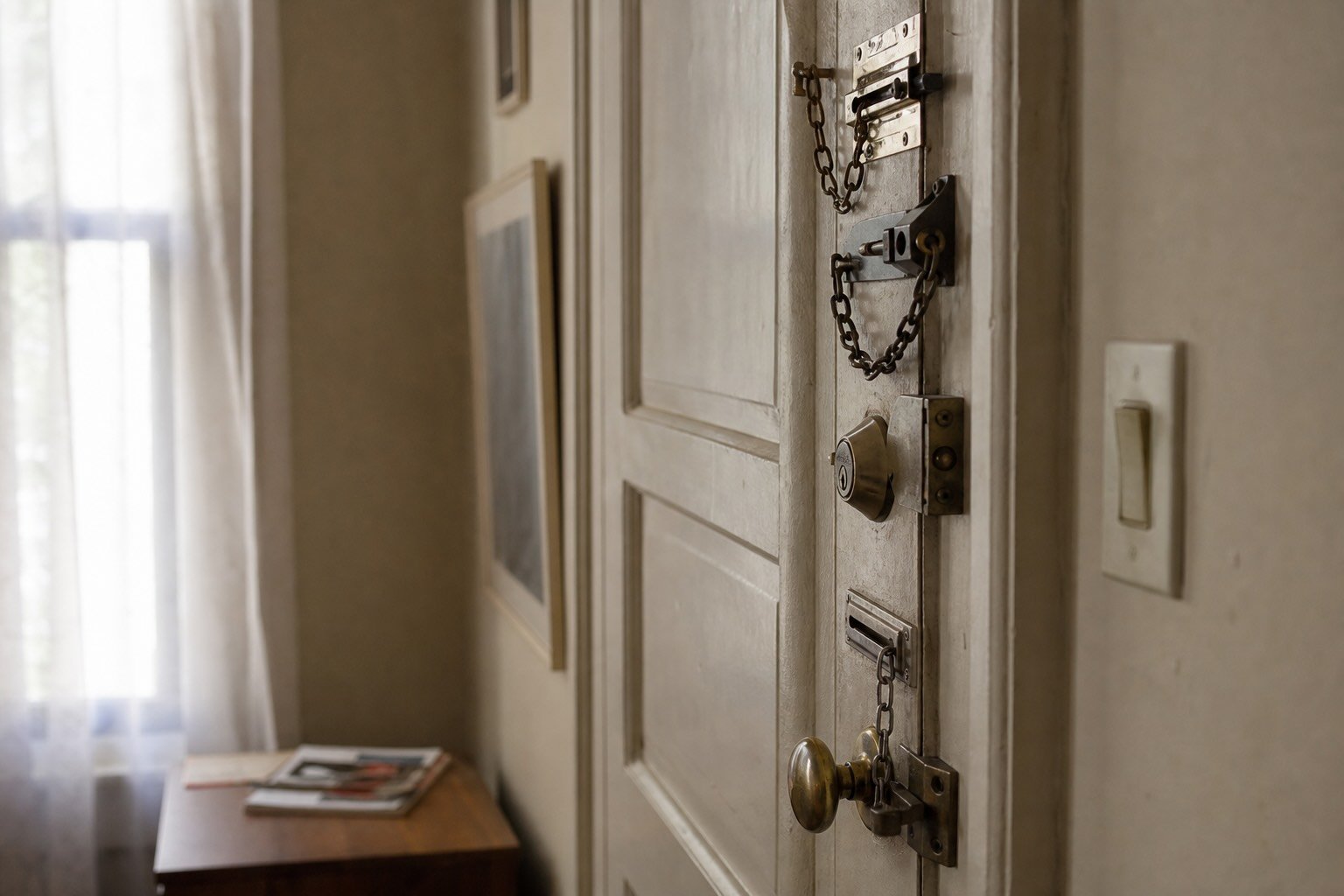
Consider your accountability arrangement and ask: does this make it harder for my partner to betray me, or does it give me a way to see whether they'll choose not to? The first is a locked door. The second is an unlocked one. Locked doors increase security at the cost of relationship healing. Open doors risk safety but provide a better measure of what the involved partner actually wants.
I am not saying the desire to reduce risk is wrong, or paranoid, or something to be ashamed of. After experiencing such tremendous pain, wanting to make betrayal harder is one of the sanest impulses a person can have. Reducing risk is real work with real value, especially early in the recovery process when safety is the immediate need. And if the injured partner chooses to leave the relationship, there is never a need to move out of that protected space.
However, if the choice is to stay in a relationship with hope that it can heal, there will need to be a return to trust. And since trust requires vulnerability, the path forward will ask something that feels impossibly unfair. At some point, the injured partner has to risk again.
I want to acknowledge how backward that sounds. In my example, the husband broke the trust. He had the affair, he told the lies, he traveled in unfamiliar squiggly lines. And now the work of rebuilding will require her to take an uncertain step before she has proof that she's completely safe.
It isn't fair. I won't pretend it is. But if she waits for the process to feel fair before she relinquishes control, she might wait forever, phone in hand, in a marriage that never mends.
So what should she do? Just take a leap of faith?
No. I wouldn't ask her to fling every door open, give back his total privacy overnight, then cross her fingers and hope for the best. That would be reckless. Rebuilding trust after betrayal is gradual. It happens in small, deliberate steps of vulnerability, each one tested before the next is taken. She unlocks one door, not the whole house. She picks something modest enough that she can survive being wrong about it, and she leaves it open on purpose, and then she watches, not to catch him, but to find out if he walks through it.
That unlocked door provides something that surveillance never can: it gives him room to choose. And his choice, made freely, in a moment where betrayal is genuinely possible, is the only thing that can actually answer her question. When she stops watching the GPS for one afternoon, and he comes home when he said he would, that tells her something the monitored version never could. Eventually, she’ll realize she hasn't thought about his location in hours, not because she's suppressing the urge to check, but because the urge has dissipated.
If you’re the one considering this risk, I should be honest about the other possibility, too. Sometimes when a door is unlocked, a partner walks through it, revealing a lack of reliability. Learning that your partner still isn't safe is painful news, but it's the truth. It provides clarity about their dependability and informs your decision. If they are not committed to being trustworthy, you should quit taking the risks and stop participating in the recovery effort.
Two Exercises for You
If you still hope for relationship healing, let me make this practical by giving you two exercises to work on.
The first exercise starts with making a list. Write down every accountability arrangement currently in place since the affair. All of them. The shared location app, the phone access, the check-ins, the rule about who to have lunch with, the passwords to accounts, the mandatory text reports. Don't judge the list as you write it; just get it all down. Then go through it and ask two questions of each item on your list.
The first question: Is this reducing risk, or is it building trust? Is this a locked door designed to make betrayal harder, or is it an unlocked one that gives me a way to see what choice they make? Be honest, because most of these will turn out to be locks, and that's okay. You're just gathering information, finding out how much of what you've called "rebuilding" has actually been fortification.
The second question: Was this accountability offered, or was it imposed? Did your partner come to you and say, "Here, I want you to have access to this, I want to show you can trust me," or did you have to demand it, extract it, install it over their reluctance? The same exact arrangement means opposite things depending on your answer. A location app they voluntarily offered is an act of love. The identical app you had to fight to install is a condition of parole. One tells you something about their heart; the other only tells you about your leverage. You may find, going down the list, that almost nothing on it was offered. That, too, is information, and it points to the real need: not for you to tighten the locks, but for them to willingly hand you the keys.
The second exercise is smaller and harder. Pick one door to unlock. Just one. Choose the smallest one you can find, the single arrangement you could most survive being wrong about. Maybe it's deciding not to check the GPS for one week. Maybe it's letting a business trip happen without requiring hourly texts. Choose it deliberately and then watch what happens.
You're not setting a trap; you're running an experiment, and an experiment has two possible outcomes. Maybe your partner doesn't exit through the unlocked door, and you've gathered a piece of real evidence that surveillance could never have given you. Or maybe they do, and you've learned something painful that you needed to know. Both results are more useful than the locked door, which only demonstrates how good you've become at standing guard.
If you take these steps, expect things to feel worse before they feel better. Unlocking that first door will spike your anxiety, because you're removing a coping mechanism, and the nervous system protests when you take away some fortification. That spike is not a sign you're doing it wrong. It's a sign you're finally doing the actual work, the vulnerable, unprovable, graduated work that trust is made of.
Finding Sweet Rest
I think back to the couple on my couch, two and a half years in, worn down to the same argument they'd been having for most of those years. If you'd asked her what she wanted, she'd have said she wanted to be able to trust him. But that isn't quite what she was reaching for with the phone checks and the GPS map. Those were attempts to find certainty, and a way to never be a fool again. I understand the desire for that guarantee, but it's a longing that can never be satisfied. Guarantees, in any relationship, simply don't exist.
What she wanted, underneath all of it, was to rest. To stop bracing. To share a moment with her husband without half her attention deployed on surveillance detail. But the rest she was after is on the far side of the very thing she had been avoiding: unlocking one door at a time to see what happens.
In a relationship, rest is not what you feel when you've finally secured every possible exit. It's what you feel when you stop depending on locked doors to keep you safe.
None of this asks you to forget what happened, hand back untested trust, or pretend the risk isn't real. It is real. You could be hurt again. That possibility is the price of staying married to a free person rather than standing guard over a captive one. But which one is more likely to love you?
For additional help in creating a useful plan for post-infidelity accountability, read Pursue Transparency, Avoid Surveillance.